


Dilip Shanghvi and Jensen Huang are two self-made business leaders who built enormous companies in very different industries.
Shanghvi transformed a small pharmaceutical venture into a global healthcare business through Sun Pharmaceutical Industries, while Huang co-founded NVIDIA and helped move GPUs from computer graphics into artificial intelligence and accelerated computing.
Quick Bio Table
| Detail | Dilip Shanghvi | Jensen Huang |
| Full Name | Dilip Shantilal Shanghvi | Jen-Hsun “Jensen” Huang |
| Age in 2026 | 70 | 63 |
| Birthplace | Amreli, Gujarat, India | Taipei, Taiwan |
| Nationality | Indian | Taiwanese-American |
| Profession | Entrepreneur, Pharmaceutical Executive | Entrepreneur, Electrical Engineer, Technology Executive |
| Company | Sun Pharmaceutical Industries | NVIDIA |
| Known For | Building Sun Pharma into a global pharmaceutical company | Co-founding NVIDIA and leading the GPU/AI revolution |
| Height | About 5 ft 6 in, according to some biographical sources | Not reliably disclosed by authoritative sources |
| Weight | About 78 kg, according to some biographical sources | Not reliably disclosed by authoritative sources |
| Net Worth | About $26.4 billion in a September 2026 Forbes estimate | About $187.4 billion in a September 2026 Forbes estimate |
Net worth figures are estimates and can change daily with market prices. Forbes listed Shanghvi at $26.4 billion and Huang at $187.4 billion in September 2026. Physical statistics are not consistently documented by primary sources, so they should be treated cautiously.
Who Is Dilip Shanghvi?

Dilip Shanghvi is the founder and executive chairman of Sun Pharmaceutical Industries, one of India’s largest pharmaceutical companies. Born in Amreli, Gujarat, in 1955, Shanghvi grew up in Kolkata, where his father operated a pharmaceutical distribution business. That early exposure gave him practical knowledge of medicines and the commercial side of healthcare. He later earned a Bachelor of Commerce degree from the University of Calcutta before entering entrepreneurship.
Shanghvi founded Sun Pharma in 1983 with a relatively small amount of starting capital and initially focused on psychiatric medicines. Rather than building the company around a single blockbuster product, his strategy involved expanding its product portfolio, entering international markets, and acquiring businesses that could add manufacturing capacity or specialized products. This approach eventually turned Sun Pharma into a multinational pharmaceutical company with operations spanning generic medicines, specialty medicines, active pharmaceutical ingredients, and consumer healthcare.
Dilip Shanghvi’s Career Highlights
One of the defining moments in Shanghvi’s career came in 2014, when Sun Pharma agreed to acquire Ranbaxy Laboratories in a transaction valued at approximately $4 billion. The deal significantly increased Sun Pharma’s international reach and changed the company’s position within the global pharmaceutical industry. Forbes has described the Ranbaxy transaction as Shanghvi’s largest acquisition.
His company continued expanding internationally. In 2023, Sun Pharma completed its $576 million acquisition of U.S.-based Concert Pharmaceuticals. In 2025, it also acquired U.S. skin-cancer drugmaker Checkpoint Therapeutics for $355 million, according to Forbes. These transactions illustrate how Shanghvi’s business model evolved from domestic pharmaceutical manufacturing into global healthcare expansion.
Dilip Shanghvi’s Awards and Influence
Shanghvi has received major business and civilian honors in India. The Government of India awarded him the Padma Shri in 2016. His other recognitions include Ernst & Young’s World Entrepreneur of the Year, Forbes Entrepreneur of the Year, Economic Times Business Leader of the Year, and several Indian business leadership awards. Sun Pharma’s own records also document his recognition by organizations including AIMA, Business India, NDTV, and CNBC-TV18.
His influence also extends beyond Sun Pharma. Shanghvi has served in industry and institutional roles, including as a former president of the Indian Pharmaceutical Alliance and chairman of the Board of Governors of IIT Bombay. He has also been associated with economic and educational initiatives in India. His career therefore includes not only company building but also participation in India’s wider business and institutional ecosystem.
Who Is Jensen Huang?
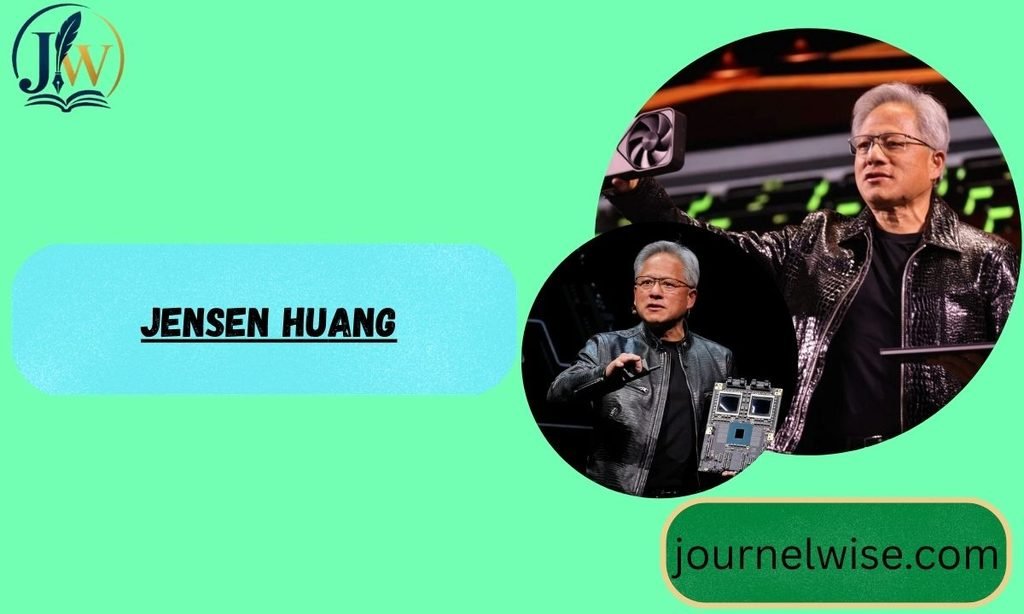
Jensen Huang is the founder, president, and CEO of NVIDIA, the semiconductor and computing company that became central to the modern AI infrastructure boom. Born in Taiwan in 1963, Huang spent part of his childhood in Taiwan and Thailand before moving to the United States. He studied electrical engineering at Oregon State University and earned a master’s degree in electrical engineering from Stanford University.
Before NVIDIA, Huang worked at LSI Logic and Advanced Micro Devices. In 1993, he co-founded NVIDIA with Chris Malachowsky and Curtis Priem. The company’s original focus was 3D graphics for computers and gaming. NVIDIA’s development of the GPU in 1999 later created a foundation for increasingly powerful parallel computing applications.
From Graphics Chips to Artificial Intelligence
NVIDIA’s transformation did not happen overnight. The company introduced CUDA in 2006, allowing developers and researchers to use GPUs for general-purpose parallel computing. That technology became particularly important for scientific computing and machine learning. NVIDIA also points to the 2012 AlexNet breakthrough as a major moment when GPU computing helped accelerate the modern AI era.
Under Huang’s leadership, NVIDIA expanded beyond gaming graphics into data centers, AI, networking, professional visualization, robotics, autonomous systems, and accelerated computing. Its Blackwell platform became an important part of the company’s latest data-center strategy. NVIDIA’s fiscal 2026 results reported $215.9 billion in revenue, up 65% year over year, with data-center computing and networking driving much of the growth.
Jensen Huang’s Awards and Career Recognition
Huang has received numerous technology and engineering honors. NVIDIA lists the Robert N. Noyce Award, IEEE Founder’s Medal, and Dr. Morris Chang Exemplary Leadership Award among his recognitions. He has also received honorary doctorates from several universities. In 2017, Fortune named him Businessperson of the Year, while Harvard Business Review ranked him first on its list of the world’s 100 best-performing CEOs in 2019.
His leadership has also become closely associated with NVIDIA’s role in generative AI. The company’s GPUs, networking systems, CUDA software ecosystem, and AI platforms now support a large range of data-center applications. NVIDIA says more than 40,000 companies use its AI technologies, demonstrating how far the company has moved beyond its original gaming market.
Net Worth and Company Scale: A Side-by-Side Look
The wealth gap between Dilip Shanghvi and Jensen Huang has become particularly large in 2026. Forbes estimated Shanghvi’s net worth at roughly $26.4 billion in September 2026, while its September estimate for Huang was around $187.4 billion. These figures are not salaries or annual income. Most billionaire wealth is tied to ownership stakes in publicly traded companies and therefore can move sharply as stock prices change.
Huang’s fortune is strongly connected to his NVIDIA ownership. Forbes reported that he owned approximately 4% of NVIDIA in one 2026 profile, while another updated profile placed his ownership around 3%, illustrating why ownership percentages and wealth estimates can change with transactions and share-price movements.
Sun Pharma vs. NVIDIA
The companies themselves operate in very different markets. Sun Pharma is primarily a healthcare and pharmaceutical business, while NVIDIA operates in semiconductors, accelerated computing, networking, and AI infrastructure. Sun Pharma reported FY2026 consolidated sales of ₹582.2 billion, equivalent to roughly ₹58,220 crore, along with ₹114.8 billion in net profit. Its FY2026 research and development investment was ₹35.5 billion.
NVIDIA’s fiscal 2026 revenue was $215.9 billion, with $130.4 billion in operating income. Its Compute & Networking segment generated $193.5 billion, while Graphics produced $22.5 billion. These numbers show the extraordinary scale reached by NVIDIA during the AI infrastructure expansion.
| Category | Dilip Shanghvi | Jensen Huang |
| Main Industry | Pharmaceuticals | Semiconductors & AI |
| Founded Company | Sun Pharma | NVIDIA |
| Company Founded | 1983 | 1993 |
| FY2026 Revenue | ₹582.2 billion | $215.9 billion |
| Major Growth Driver | Pharmaceuticals and innovative medicines | GPUs, AI, data centers and networking |
| Approx. 2026 Forbes Net Worth | $26.4B | $187.4B |
| Leadership Role | Founder & Executive Chairman | Founder, President & CEO |
The comparison is useful because both fortunes were built primarily through equity ownership and long-term company growth rather than conventional salary income. Their paths, however, reflect different economic eras: Shanghvi built around pharmaceuticals and acquisitions, while Huang built around semiconductor engineering, software ecosystems, and accelerated computing.
Is There an Actual Connection Between Them?
There is no widely documented direct business partnership or major collaboration between Dilip Shanghvi and Jensen Huang in the authoritative company and biographical sources reviewed for this article. Their names appear together largely because both are internationally recognized billionaires and founders who built major companies in different sectors.
Their industries can still intersect indirectly. Pharmaceutical companies increasingly use high-performance computing, data analysis, simulation, and artificial intelligence in areas such as drug discovery and research. NVIDIA’s technology is used across healthcare and life sciences, while Sun Pharma operates a significant research and development organization. However, that broader industry connection should not be confused with a documented personal partnership between Shanghvi and Huang.
Different Industries, Similar Founder Model
There is an interesting structural similarity in their careers. Shanghvi started Sun Pharma in 1983 and expanded it through product development, international growth, and acquisitions. Huang co-founded NVIDIA in 1993 and stayed with the company through multiple technology shifts, from PC graphics to programmable GPUs, accelerated computing, and AI.
Both careers also show the importance of long-term ownership. Shanghvi remains Sun Pharma’s executive chairman, while Huang has remained NVIDIA’s president and CEO since its founding. Their continued involvement gives both founders an unusually long connection to the companies they created.
Why Their Stories Attract Attention
Search interest around Dilip Shanghvi and Jensen Huang reflects a broader interest in billionaire founders, company-building strategies, net worth, business history, and technology-driven wealth. Yet their stories should not be treated as identical. Shanghvi’s expertise is rooted in pharmaceuticals, manufacturing, acquisitions, and global healthcare markets. Huang’s career is rooted in electrical engineering, semiconductor architecture, software platforms, and accelerated computing.
Their different backgrounds also explain why comparing their net worth alone provides limited context. A more useful biography looks at how each entrepreneur created value, how their companies evolved, and which industries ultimately supported their wealth.
Business Strategies Behind Their Success
Dilip Shanghvi’s Acquisition-Led Expansion
A major part of Shanghvi’s strategy has been expansion through acquisitions. The Ranbaxy deal in 2014 was particularly important because it dramatically increased Sun Pharma’s international scale. More recent transactions, including Concert Pharmaceuticals and Checkpoint Therapeutics, continued the company’s focus on specialized and innovative healthcare businesses.
Sun Pharma’s financial results also show the importance of research. In FY2026, the company reported ₹35.54 billion in R&D investment, representing 6.1% of sales. Its Global Innovative Medicines business generated $1.42 billion during the year. These figures demonstrate that the company’s current model extends beyond traditional generic medicines.
Jensen Huang’s Technology Platform Strategy
Huang’s strategy has centered on building an ecosystem rather than selling chips alone. NVIDIA’s GPU hardware became increasingly valuable because developers could build applications around CUDA and the company’s broader software stack. Over time, this created a platform connecting hardware, software, networking, data centers, researchers, and AI developers.
The scale of this strategy is reflected in NVIDIA’s current ecosystem. NVIDIA says more than four million developers use its technology, while more than 40,000 companies use its AI technologies. This combination of hardware and software has helped make NVIDIA an important infrastructure provider for modern AI workloads.
Personal Life, Lifestyle and Public Profile
Both billionaires maintain relatively different public profiles from many entertainment celebrities. Shanghvi’s public identity is strongly connected to Sun Pharma, corporate leadership, philanthropy, and Indian business institutions. Forbes lists him as married with two children and identifies Mumbai as his residence.
Huang has a much higher public profile within the technology industry, especially because of NVIDIA’s central role in the AI boom. Forbes lists him as married and identifies Los Altos, California, as his residence. His public appearances often feature NVIDIA’s technology strategy, AI infrastructure, robotics, and the future of computing rather than celebrity-oriented entertainment.
FAQs About Dilip Shanghvi and Jensen Huang
Who is richer, Dilip Shanghvi or Jensen Huang?
Forbes’ September 2026 estimates put Jensen Huang’s net worth at roughly $187.4 billion, compared with about $26.4 billion for Dilip Shanghvi. Billionaire estimates fluctuate with market prices.
What companies did Dilip Shanghvi and Jensen Huang build?
Dilip Shanghvi founded Sun Pharmaceutical Industries in 1983, while Jensen Huang co-founded NVIDIA in 1993 with Chris Malachowsky and Curtis Priem.
What is Dilip Shanghvi’s net worth in 2026?
Forbes estimated Dilip Shanghvi’s net worth at approximately $26.4 billion in September 2026. The figure can change as the value of his holdings changes.
What is Jensen Huang’s net worth in 2026?
Forbes estimated Jensen Huang’s net worth at approximately $187.4 billion in September 2026. Much of his wealth is associated with his NVIDIA ownership.
Are Dilip Shanghvi and Jensen Huang business partners?
There is no widely documented direct business partnership between the two in the authoritative sources reviewed. They are better understood as founders of major companies in pharmaceuticals and semiconductor technology.
What industries made Dilip Shanghvi and Jensen Huang billionaires?
Shanghvi built his wealth primarily through pharmaceuticals and healthcare, while Huang built his through semiconductors, GPUs, accelerated computing, and artificial intelligence.
Where were Dilip Shanghvi and Jensen Huang born?
Dilip Shanghvi was born in Amreli, Gujarat, India, while Jensen Huang was born in Taipei, Taiwan. Huang later moved with his family and eventually established his career in the United States.
Conclusion
Dilip Shanghvi and Jensen Huang represent two very different models of modern billionaire entrepreneurship.
Shanghvi built Sun Pharma from a small pharmaceutical venture into a global healthcare company through manufacturing, research, international expansion, and acquisitions.
Huang co-founded NVIDIA and guided it from graphics technology into a major platform for accelerated computing and AI.
